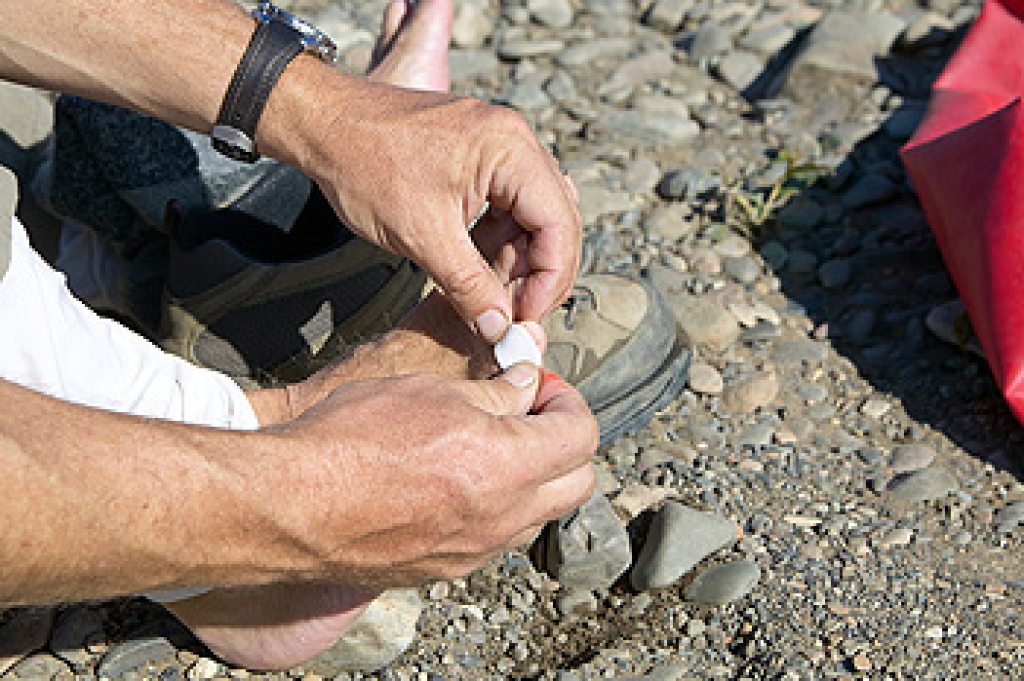
Foot blisters from hiking are fluid-filled pockets that form when repeated friction irritates the skin. They commonly appear on the heel, toes, or ball of the foot while walking. Symptoms include tenderness, redness, and a raised fluid-filled area. The first few days of hiking are important because your feet are adjusting to increased distance and footwear. Blisters often develop in the same spot when friction continues against vulnerable skin. Recognizing early irritation can help prevent a hiking blister from worsening.
Poorly fitting hiking boots can allow foot movement, while tight shoes can create pressure points. Moisture from sweat can soften the skin and increase friction. Rough socks, longer hikes, and sudden increases in mileage may also contribute. Uneven trails can cause your feet to slide inside footwear, creating repeated rubbing. A blister may recur because that area remains vulnerable to friction. Properly fitted boots can lower risk.
If a blister develops, protect the area and avoid popping it to avoid an infection. Keep the area clean and covered. A podiatrist can examine the blister, check for infection, and determine whether drainage is needed. If necessary, the podiatrist can clean the area using sterile techniques. The podiatrist may recommend padding or footwear changes to reduce friction while healing. Increasing redness, swelling, or pain should receive prompt attention.
Preventing hiking blisters starts before hitting the trail. Break in hiking boots gradually and watch for hot spots. Stop when you notice rubbing and adjust your footwear. Keep feet dry and use padding over blister-prone areas. Inspect your feet after hiking and allow irritated skin to recover. If you frequently have foot blisters from hiking, it is suggested that you consult a podiatrist for effective relief and prevention tips.
Blisters are prone to making everyday activities extremely uncomfortable. If your feet are hurting, contact Dr. Joshua David Scoll of Pennsylvania. Our doctor can provide the care you need to keep you pain-free and on your feet.
Foot Blisters
Foot blisters develop as a result of constantly wearing tight or ill-fitting footwear. This happens due to the constant rubbing from the shoe, which can often lead to pain.
What Are Foot Blisters?
A foot blister is a small fluid-filled pocket that forms on the upper-most layer of the skin. Blisters are filled with clear fluid and can lead to blood drainage or pus if the area becomes infected.
How Do Blisters Form?
Blisters on the feet are often the result of constant friction of skin and material, usually by shoe rubbing. Walking in sandals, boots, or shoes that don’t fit properly for long periods of time can result in a blister. Having consistent foot moisture and humidity can easily lead to blister formation.
Prevention & Treatment
It is important to properly care for the affected area in order to prevent infection and ease the pain. Do not lance the blister and use a Band-Aid to provide pain relief. Also, be sure to keep your feet dry and wear proper fitting shoes. If you see blood or pus in a blister, seek assistance from a podiatrist.
If you have any questions, please feel free to contact one of our offices located in Philadelphia, Bensalem . We offer the newest diagnostic and treatment technologies for all your foot care needs.
